
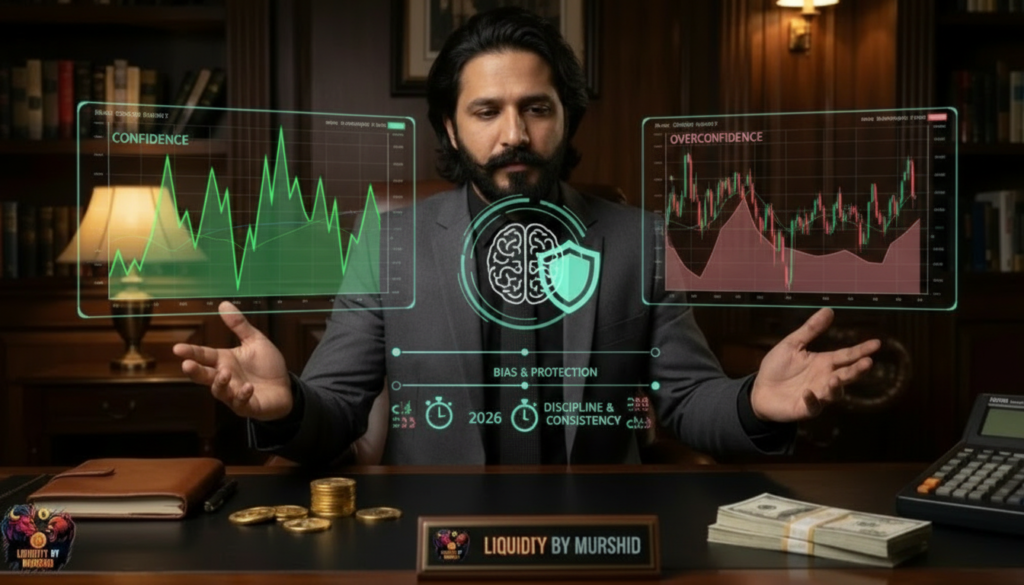
Confidence vs Overconfidence The Thin Line In Trading
In today’s 2026 market environment, confidence is essential for execution. Without it, traders hesitate, miss opportunities and second guess valid setups. However, when confidence turns into overconfidence, discipline breaks down and risk expands beyond control.
Many traders struggle not because they lack confidence, but because they do not recognize when confidence has crossed into overconfidence. The difference is subtle, yet the consequences are significant.
This article explains the thin line between confidence and overconfidence in trading, how modern market conditions amplify the risk and how professional traders stay balanced.
For structured execution models and mindset frameworks used by disciplined traders, explore the education at Liquidity By Murshid.
What Real Confidence Looks Like In Trading
True confidence in trading comes from preparation and repetition. It is rooted in knowing your rules, understanding your edge and executing consistently regardless of short term outcomes.
Confident traders:
- Follow their plan without hesitation.
- Accept losses as part of the process.
- Maintain consistent risk across trades.
Confidence does not require winning. It requires trust in the process.
What Overconfidence Looks Like In Trading
Overconfidence is often disguised as skill. It usually appears after a streak of wins, a strong month or a few trades that move quickly in your favour.
Signs of overconfidence include:
- Increasing risk without statistical justification.
- Trading outside optimal sessions or conditions.
- Ignoring stops or widening them emotionally.
In the 2026 market environment, leverage and fast execution make the cost of overconfidence immediate.
Why Modern Markets Make Overconfidence Dangerous
January 2026 markets are shaped by algorithmic execution, rapid information flow and sudden volatility. These conditions can reward aggressive behaviour briefly, reinforcing false confidence.
- Winning streaks can occur by chance.
- Liquidity can disappear during news events.
- Leverage amplifies both skill and mistakes.
Overconfident traders mistake favourable conditions for permanent skill.
Confidence Is Process Based Overconfidence Is Outcome Based
One of the clearest ways to separate confidence from overconfidence is to look at what it is anchored to.
Confidence is anchored to:
- Rules and execution quality.
- Long term statistics.
- Risk discipline.
Overconfidence is anchored to:
- Recent wins.
- Emotional highs.
- The belief that the market is predictable.
How Professionals Stay On The Right Side Of The Line
Professional traders expect confidence to fluctuate. They prevent overconfidence by enforcing structural constraints.
- Fixed risk limits regardless of recent performance.
- Mandatory reviews after strong winning periods.
- Predefined trading sessions and conditions.
These rules protect traders from themselves during emotional highs just as much as during lows.
A Self Check To Stay Balanced
Before placing a trade, ask:
- Would I take this trade if I had lost the last two?
- Is my risk consistent with my plan?
- Am I trading process or emotion?
If any answer creates hesitation, pause. That pause protects capital.
Conclusion Confidence Is Built Overconfidence Is Borrowed
In the 2026 trading environment, confidence is a requirement. Overconfidence is a liability. The difference is subtle, but it defines long term outcomes.
Confidence is built slowly through discipline, repetition and respect for risk. Overconfidence is borrowed from recent success and repaid through drawdowns. Traders who understand this thin line protect both their mindset and their account.
To learn how disciplined traders maintain balance across winning and losing periods, visit Liquidity By Murshid.