
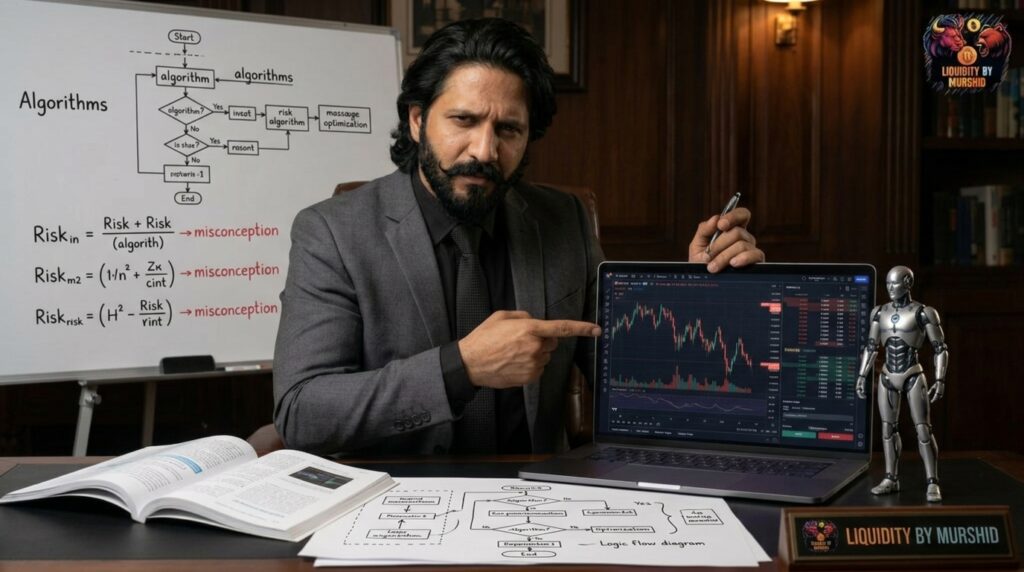
The Biggest Misconceptions About Trading Bots (2026 Reality)
Trading bots continue to gain popularity in 2026. As automation spreads across forex, crypto and gold markets, many traders believe bots can replace skill and discipline. However, this assumption creates unrealistic expectations.
In reality, trading bots are simply automated execution systems. They follow predefined rules and risk parameters. Therefore, their performance depends entirely on the strategy and risk management behind them.
Understanding the biggest misconceptions about trading bots helps traders avoid costly mistakes. More importantly, it clarifies what automation can and cannot do in modern liquidity-driven markets.
If you are new to automated trading, first review how automation helps part-time traders.
Misconception 1: Trading Bots Guarantee Profits
Many beginners assume a bot will generate consistent profits automatically. Unfortunately, markets do not work that way.
Bots execute strategies. Consequently, if the strategy performs poorly, the bot simply executes losses faster.
Successful automation always depends on:
- A validated trading strategy.
- Controlled risk parameters.
- Adaptation to changing market conditions.
Therefore, bots should never be viewed as guaranteed profit machines.
Misconception 2: Bots Remove The Need For Risk Management
Another common misunderstanding involves risk control. Some traders believe automation eliminates the need for risk management.
In reality, bots follow risk settings exactly as programmed. As a result, incorrect risk parameters can damage an account very quickly.
For example, improper position sizing or aggressive leverage may cause a bot to accumulate losses during volatile conditions.
That is why risk frameworks remain essential. Learn more about structured protection in why daily loss limits protect your account.
Misconception 3: Bots Can Predict The Market
Despite marketing claims, no trading bot can predict the market perfectly. Instead, bots operate using probability-based rules.
Markets constantly shift between volatility expansion and liquidity compression. Consequently, strategies that perform well in one environment may struggle in another.
For that reason, traders must monitor performance and adjust strategies when market conditions change.
Misconception 4: Automation Eliminates Emotional Trading
At first glance, automation appears to remove emotional decision-making. While bots execute trades without fear or hesitation, traders still control the system.
Consequently, emotions often appear through human decisions such as:
- Changing bot settings after losses.
- Increasing risk following short-term profits.
- Turning bots on or off impulsively.
Therefore, emotional discipline remains necessary even when using automated systems.
If emotional reactions influence trading decisions, review understanding emotional bias and over-confidence.
Misconception 5: Bots Work In Every Market Condition
Many traders expect a single bot to perform well in all conditions. However, markets constantly rotate between trends, ranges and liquidity sweeps.
For instance, trend-following bots may struggle during consolidation phases. Meanwhile, mean-reversion strategies may fail during strong directional moves.
Consequently, professional traders often use different models depending on the market environment.
How Professional Traders Use Bots Correctly
Instead of expecting perfection, experienced traders treat bots as execution tools. Automation improves consistency and speed, but it does not replace strategic thinking.
Professional automation typically includes:
- Clearly defined strategy rules.
- Strict risk management settings.
- Continuous performance monitoring.
- Adjustments based on liquidity conditions.
This structured approach allows automation to support disciplined trading rather than replace it.
Conclusion Automation Is A Tool, Not A Shortcut
Trading bots offer powerful advantages in modern markets. They execute trades instantly, follow predefined rules and remove hesitation during volatile conditions.
Nevertheless, automation cannot replace strategy, discipline or risk management. Successful traders treat bots as tools within a structured system.
To learn how automation integrates with liquidity-based trading frameworks, visit Liquidity By Murshid.