
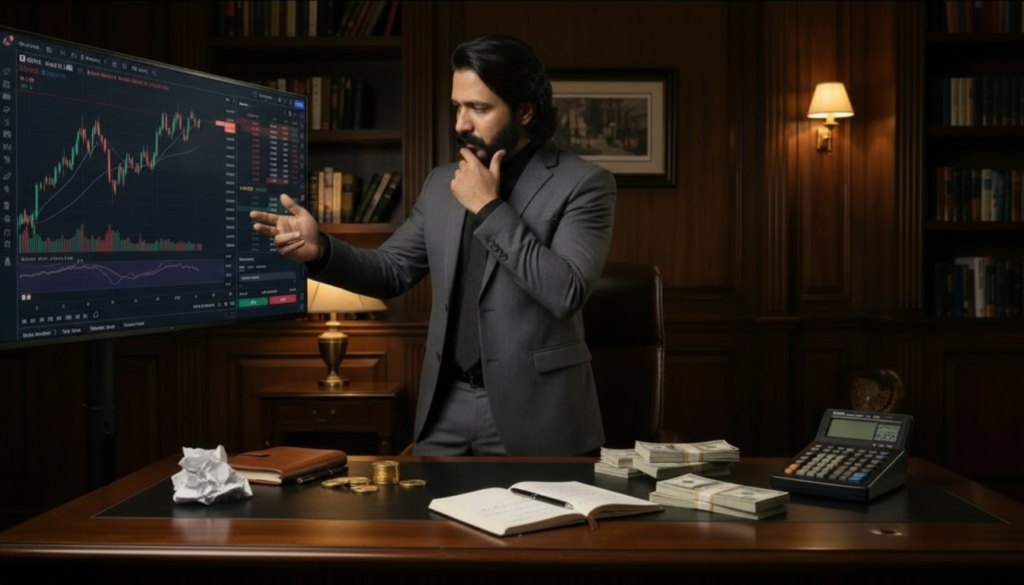
The Psychology Behind Revenge Trading
In January 2026, markets are faster, more accessible and more psychologically demanding than ever. With instant execution, constant price movement and endless information, traders are under continuous pressure to perform. One of the most common emotional responses to this pressure is revenge trading.
Revenge trading occurs when a trader attempts to recover a loss by immediately taking new trades without proper analysis or discipline. It is not a strategy problem. It is a psychological reaction to discomfort, frustration and perceived failure.
Understanding the psychology behind revenge trading is essential if you want long term consistency. This article explains why the urge to revenge trade is so strong, how modern market conditions amplify it and how disciplined traders prevent it.
For structured routines and mindset frameworks used by professional traders, explore the education at Liquidity By Murshid.
Why Losses Feel So Personal
From a psychological standpoint, the human brain is wired to avoid loss. Studies in behavioural finance consistently show that losses are felt more intensely than gains of the same size. In trading, this bias is amplified because losses are immediate and measurable.
In the 2026 market environment, this effect is even stronger due to:
- Instant order execution and real time PnL updates.
- Social media and constant exposure to other traders’ results.
- High volatility assets that move quickly against positions.
When a trade loses, the brain often interprets it as a threat or failure, triggering an emotional response rather than a rational one.
The Emotional Cycle That Creates Revenge Trading
Revenge trading usually follows a predictable emotional cycle. Recognising this cycle is the first step toward breaking it.
- A loss creates frustration and self doubt.
- The trader feels an urgent need to recover the loss.
- Trades are taken without full confirmation or planning.
- Additional losses increase emotional pressure.
At this stage, logic is overridden by emotion. The focus shifts from executing a process to chasing an outcome.
Why Modern Markets Amplify Revenge Trading
January 2026 market research highlights how modern trading environments increase the likelihood of revenge trading. Platforms are designed for speed and engagement, not emotional regulation.
- One click trading removes friction between emotion and action.
- Constant alerts and price movement create urgency.
- Leverage magnifies both gains and emotional responses.
Without predefined rules, traders are more likely to act impulsively when emotions run high.
Revenge Trading Is A Control Issue Not A Knowledge Issue
Most traders who revenge trade know better. They understand their strategy, risk rules and market concepts. The problem is not a lack of knowledge. It is a loss of emotional control.
Revenge trading often includes:
- Increasing position size to recover faster.
- Trading outside optimal sessions or conditions.
- Ignoring predefined stop losses.
These actions are attempts to regain control emotionally, not strategically.
How Professional Traders Prevent Revenge Trading
Professional traders accept losses as part of the business. They remove emotional decision making by building structural limits into their trading.
- Daily and weekly loss limits that force inactivity.
- Predefined trade frequency limits.
- Post loss routines that include stepping away from charts.
These rules protect traders from themselves during emotionally vulnerable moments.
Replacing Revenge Trading With Process Thinking
The solution to revenge trading is not emotional suppression. It is process orientation.
Process focused traders ask:
- Did I follow my rules?
- Was risk managed correctly?
- Is this a high probability environment?
When focus shifts from outcome to execution, the emotional charge of losses decreases.
Conclusion Awareness Breaks The Revenge Cycle
In the January 2026 trading environment, revenge trading remains one of the fastest ways to destroy consistency. It is driven by loss aversion, emotional urgency and the illusion that the next trade must fix the previous one.
By understanding the psychology behind revenge trading, setting firm structural limits and committing to process over outcome, traders can break the cycle. Losses will still happen, but they will no longer control behaviour.
To learn how disciplined traders build psychological resilience alongside execution models, visit Liquidity By Murshid.